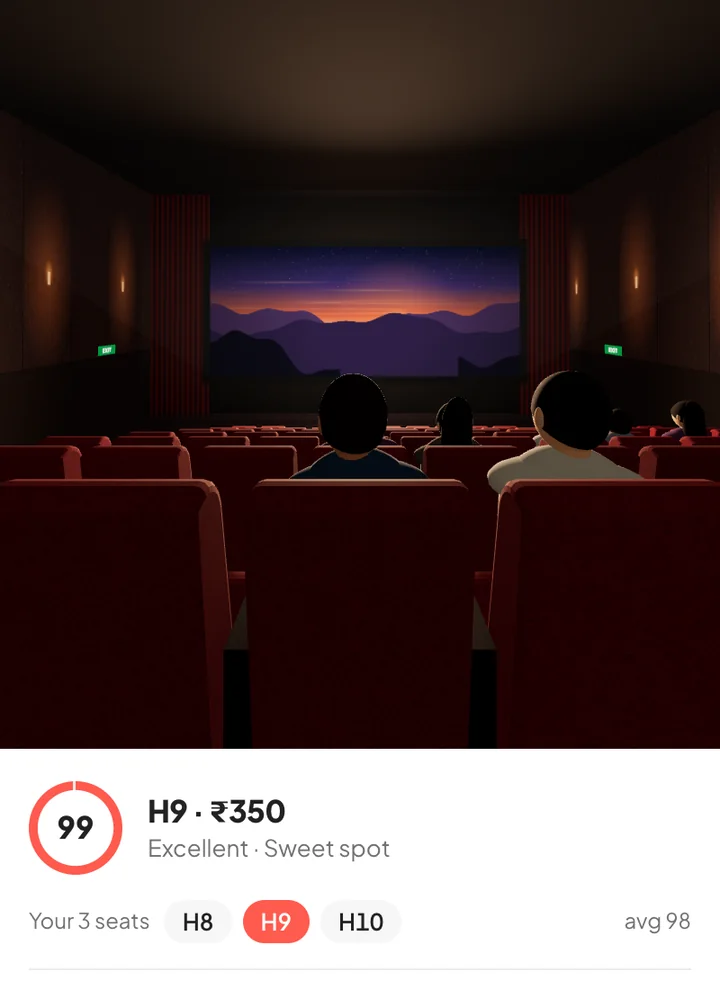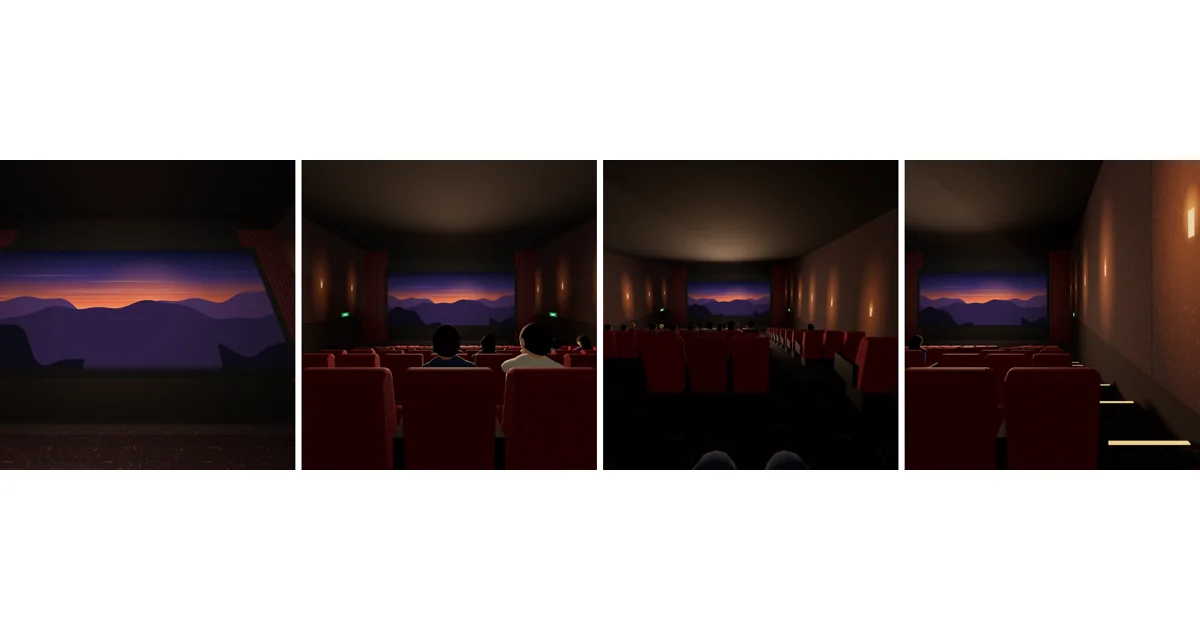
Every seat in a theatre gives you a different film. The same screen can fill your whole view from the front rows and look like a big TV from the back. Here is what the view from each part of a cinema hall is really like, and how to check a seat before you pay for it.
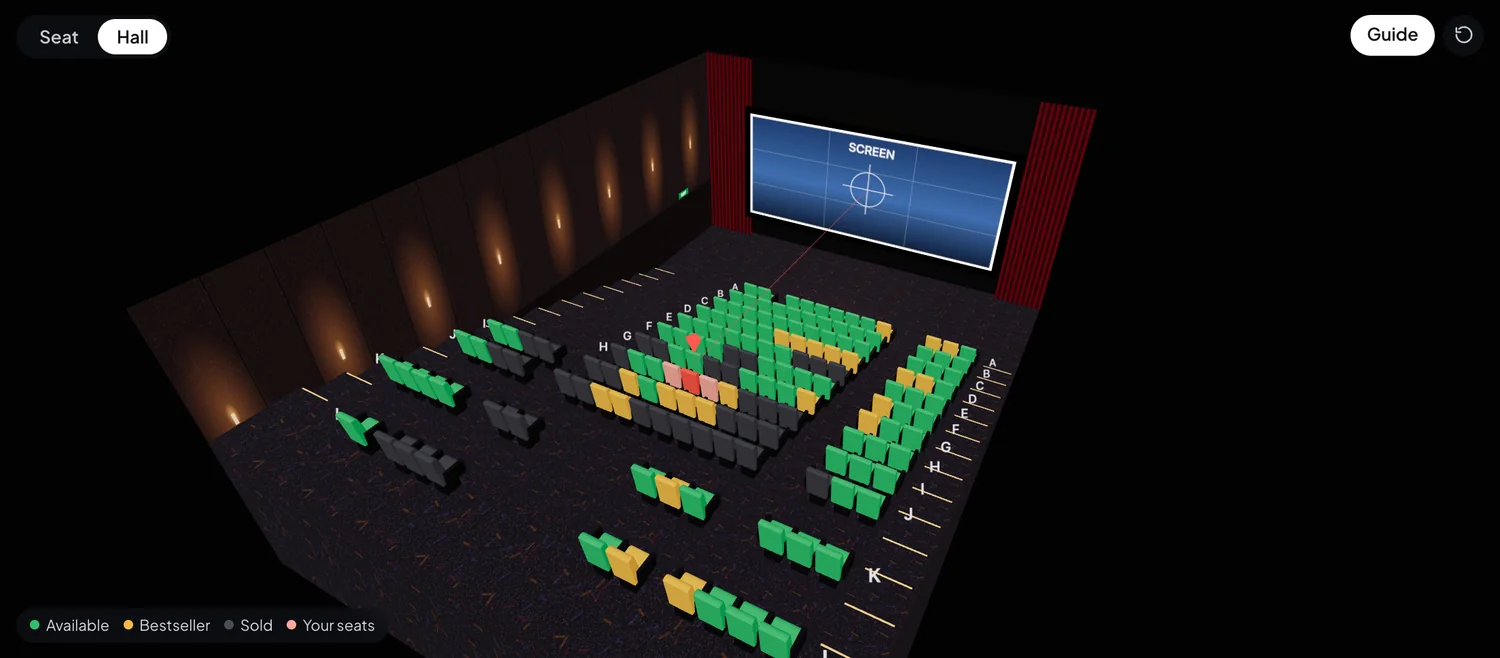
Want to see it rather than read it? We put four seats of the same hall side by side in 3D.
Front rows
The screen overflows your view: more than 60° of it, so you turn your head to follow the action and miss what happens at the edges. You also look up for two to three hours. Good only if nothing else is left, or for a short film you want to feel enormous.
Middle rows
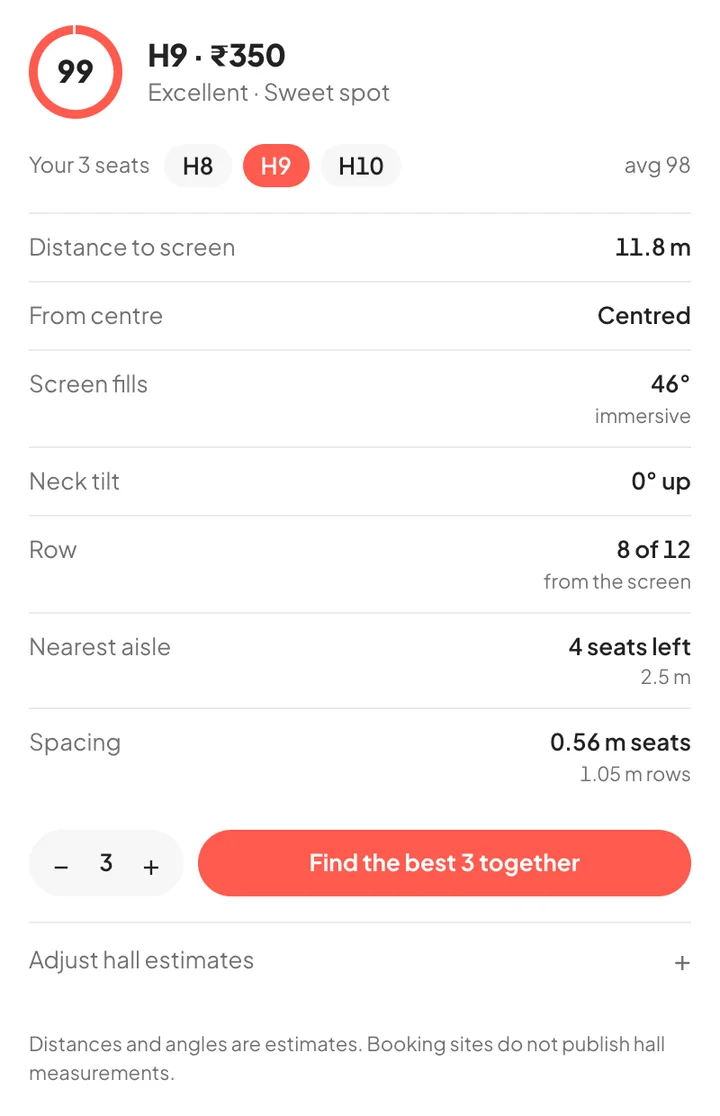
The sweet spot. About two-thirds of the way back, the screen fills roughly 36–55° of your view, the size cinema engineers design for. You see the whole picture at once, the sound from the speakers around the hall is balanced, and your head stays level.
Back rows
The screen looks smaller, but you see all of it without effort. Back rows are underrated in small screens, where they’re often the best seats still free. In very large halls they can feel distant; there, a row or two forward is better.
Side seats
The further you sit from the centre line, the more the picture skews and the more one side’s speakers dominate. A centre seat one or two rows further back beats a side seat in the “best” row. On a 3D movie, side seats are worse still.
Balcony and recliner rows
Balconies and recliner sections are usually raised and central, so nobody blocks your view. They’re often far from the screen, which suits big screens and can feel small on narrow ones. Check the screen size from the seat, not just the price tier.
How to view theatre seats before you book
- Open the show on seats.movie. We rank every show in your city by the best seats still free.
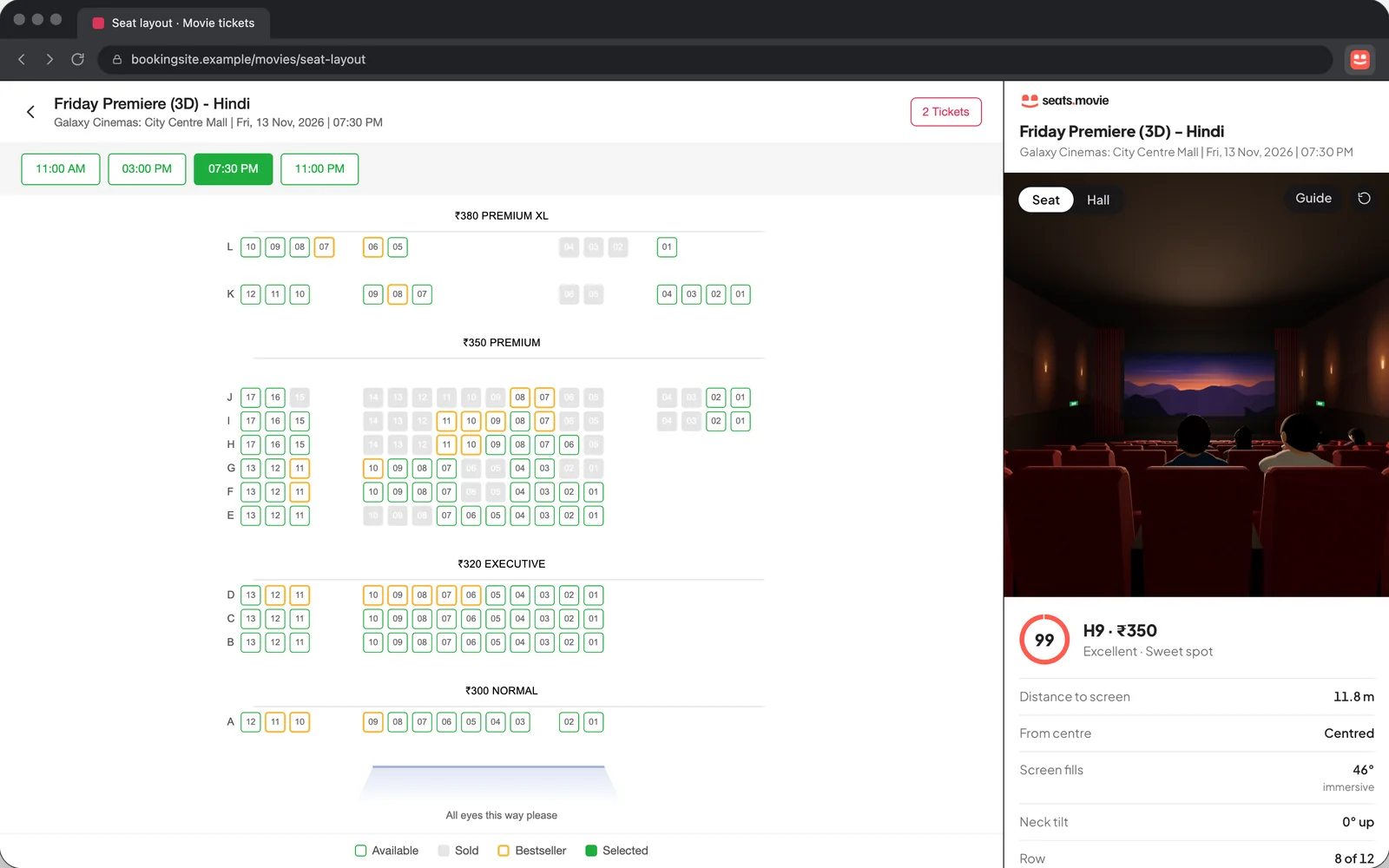
- Tap any seat and switch to 3D to see the screen from it. Compare a few.
- Booking directly on BookMyShow or District? The Chrome extension shows the same 3D view beside their seat map.
Want the method behind the numbers? See how we score a seat, or read about the best seats in a movie theatre.