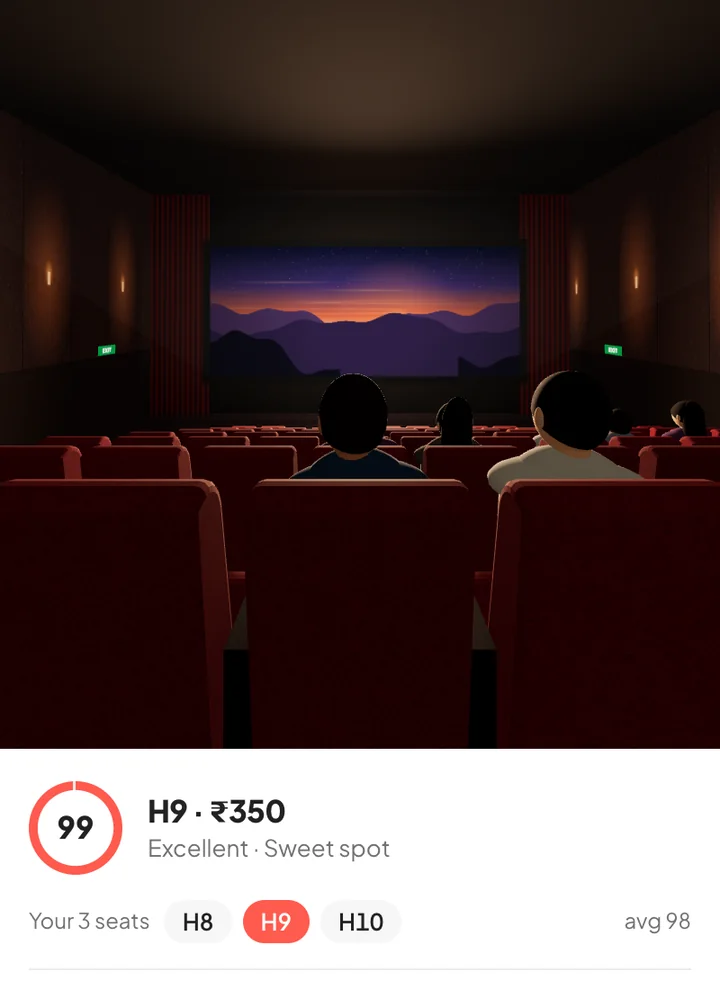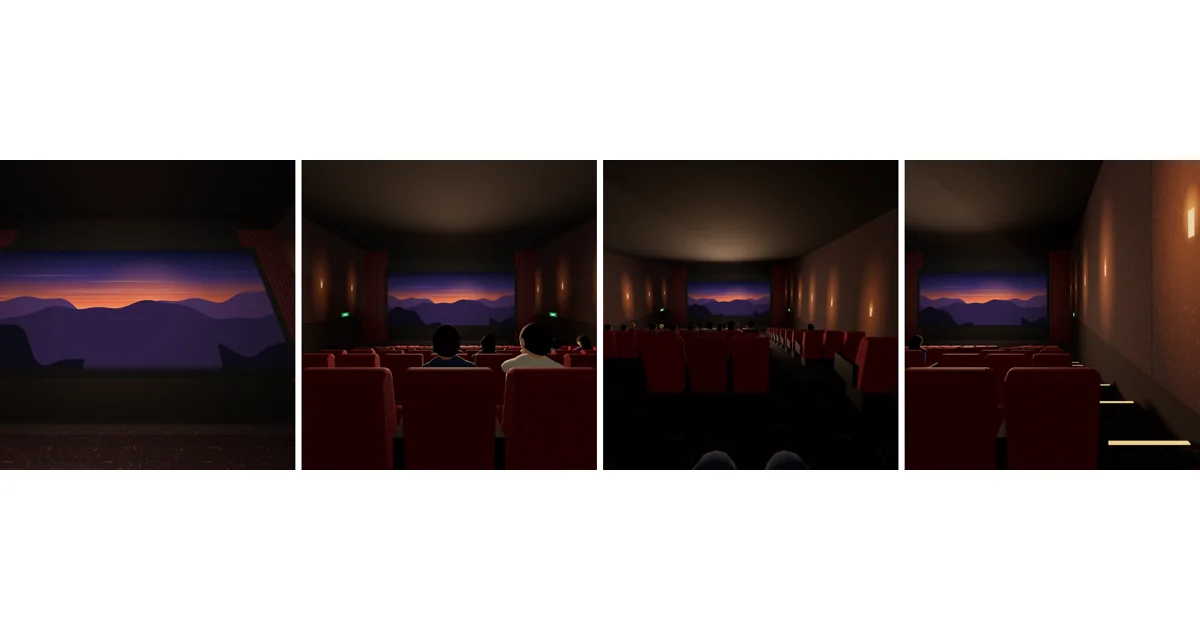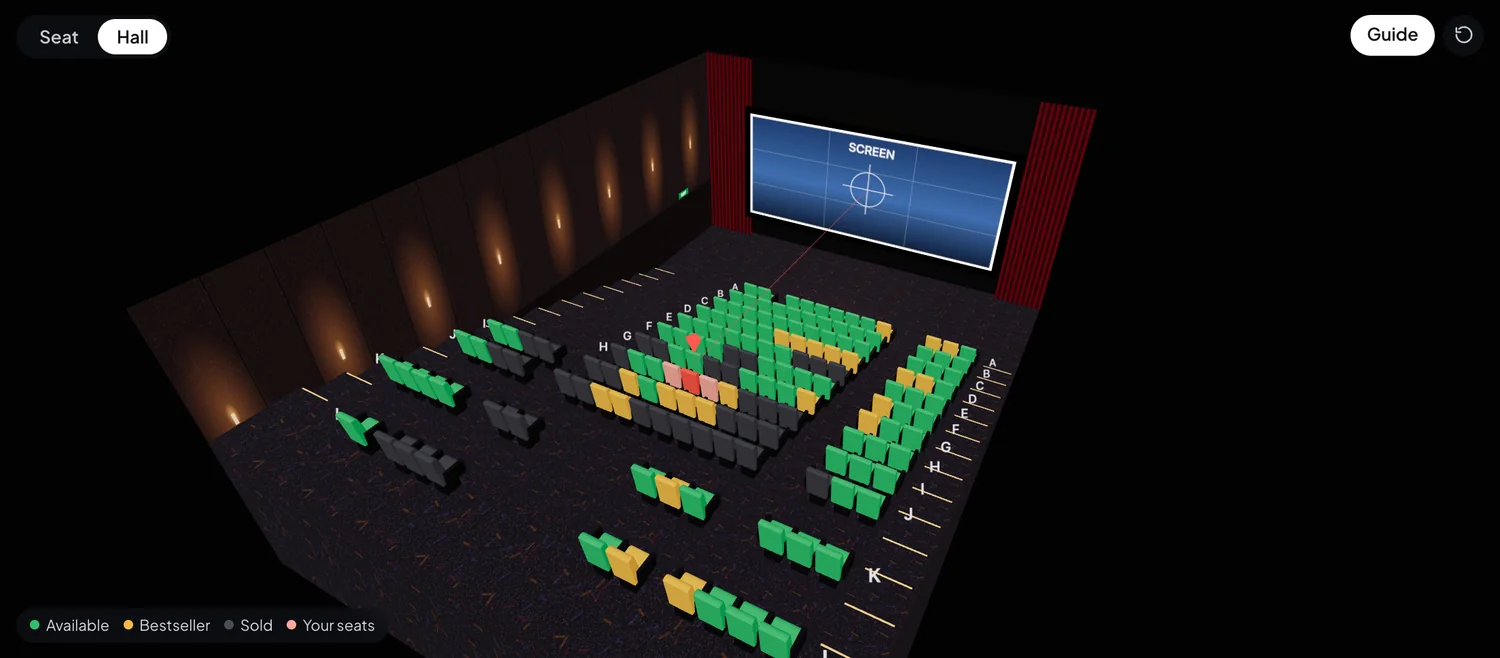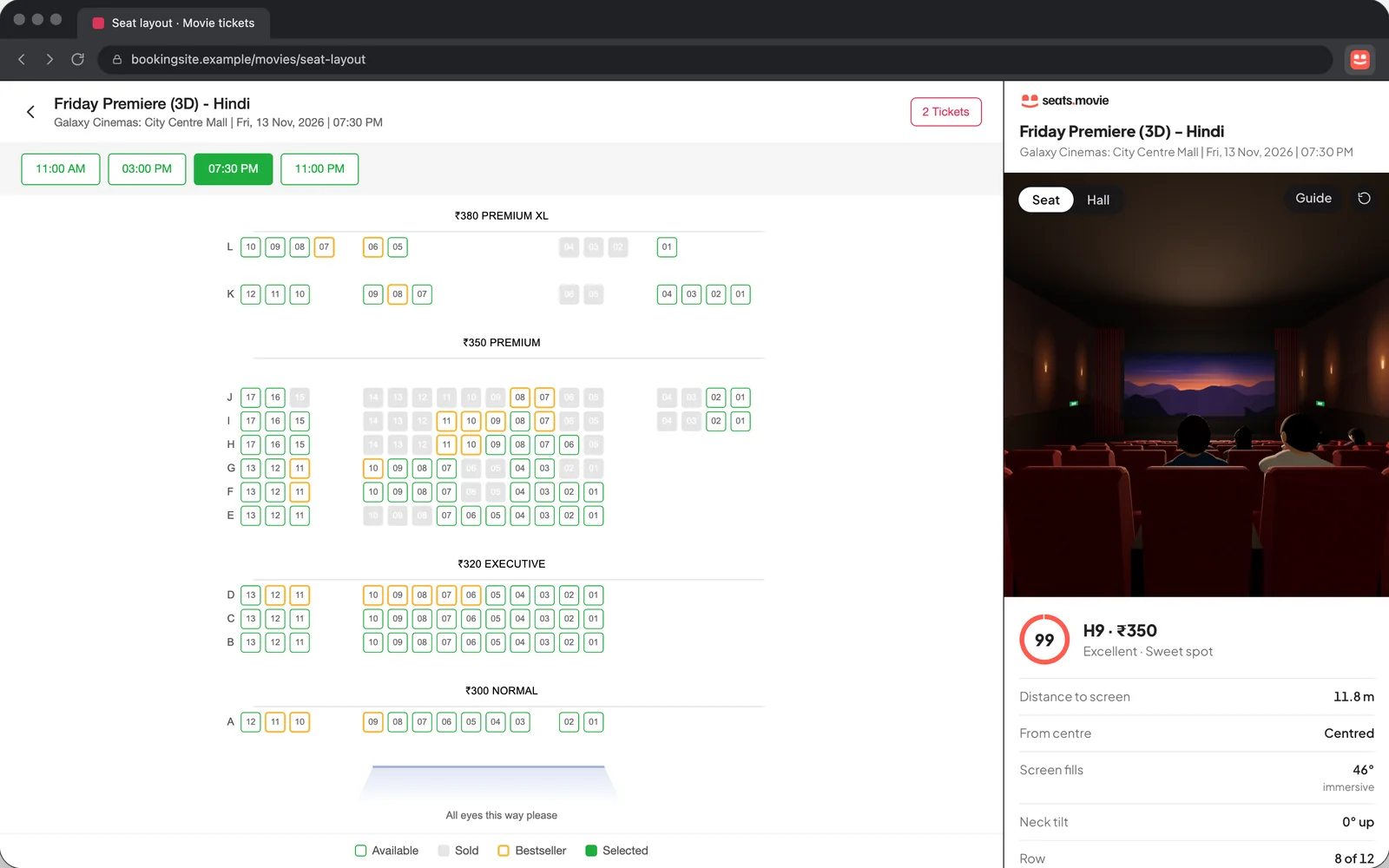
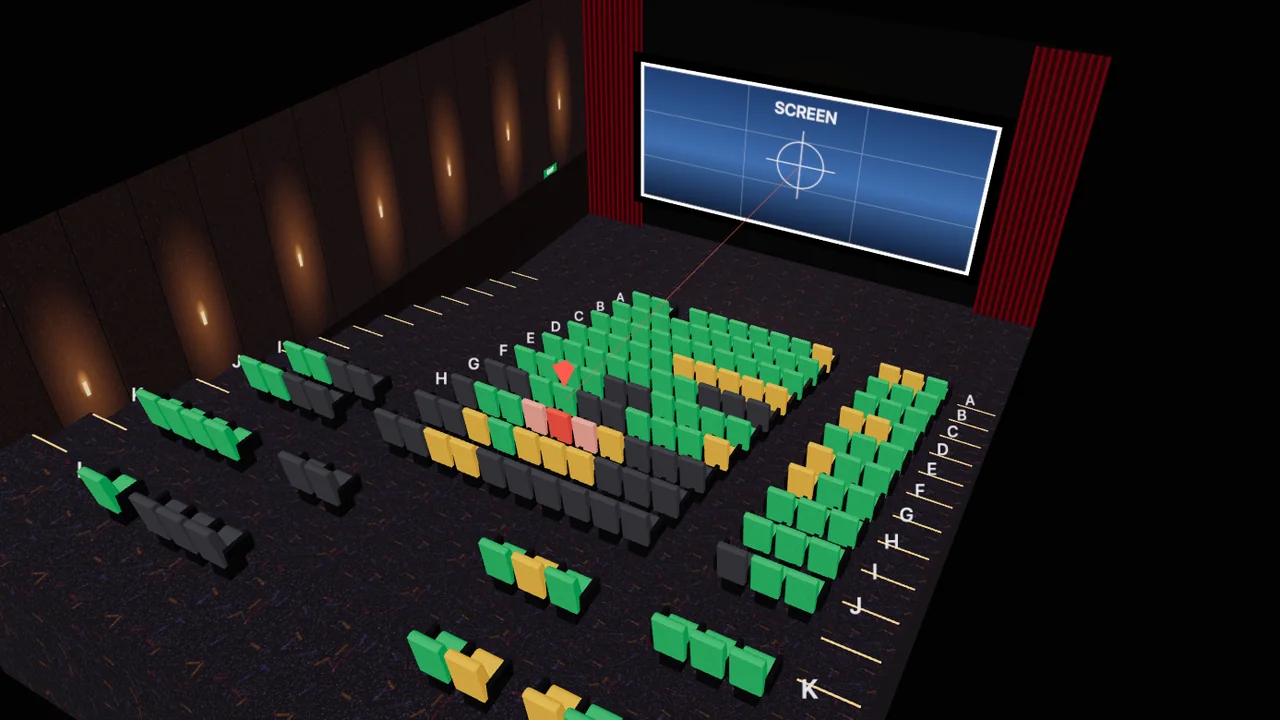
The short answer: about two-thirds of the way back, in the middle of the row. The long answer depends on the hall, the screen and the film, so here’s why that rule works and when to bend it.
The two-thirds rule
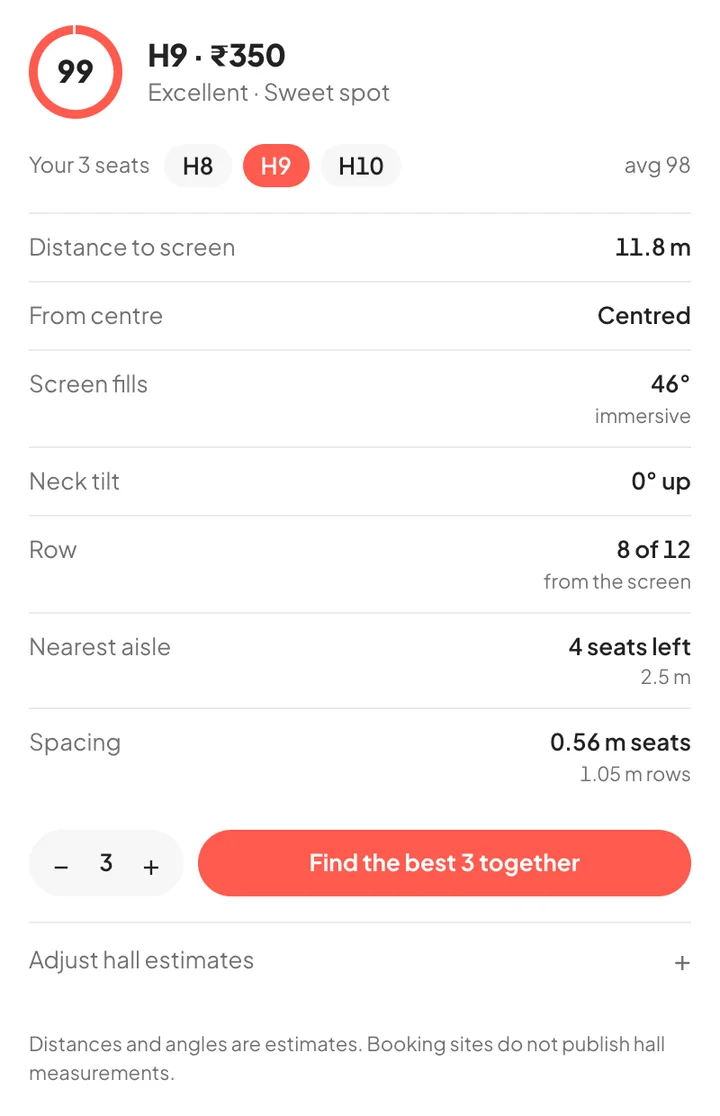
Cinema screens are designed to fill a certain share of your view. About two-thirds back, the screen covers roughly 36–55° of it, enough to feel immersive without turning your head. Closer, and the edges fall outside your view. Further, and the screen shrinks. The surround sound is usually tuned for this part of the hall too.
Stay on the centre line
Facing the screen straight on keeps the picture undistorted and the sound balanced. Within about 13° of the centre line you won’t notice the angle. Further out, faces stretch and text skews. When you have to choose, move back before you move sideways.
What changes by format
| Format | Best place to sit |
|---|---|
| IMAX | A bit further back than usual, middle of the hall. The screen is taller, so the front third is a strain. |
| 3D | As central as possible. Depth works straight on; side seats double the image. |
| 4DX / motion seats | Middle rows, centre. You’ll feel the effects anywhere, but you still want the whole screen in view. |
| Dolby Atmos | Middle rows, centre, where the overhead and surround speakers are balanced. |
| Recliners | Often the back rows. Check the screen size from there: reclining makes you look up a little. |
Booking for a group
The best single seat matters less than the best block: seats side by side, with no aisle or sold seat between them. Ask for the number you need and pick the block whose weakest seat is still good. seats.movie does this for every show: set the seat count and it ranks the best seats together.
Find them for your show
Pick your city on seats.movie and choose a movie: we read every show’s live seat map and list the best seats still free, with a 3D view from each. The full method is on how we pick the best seat.