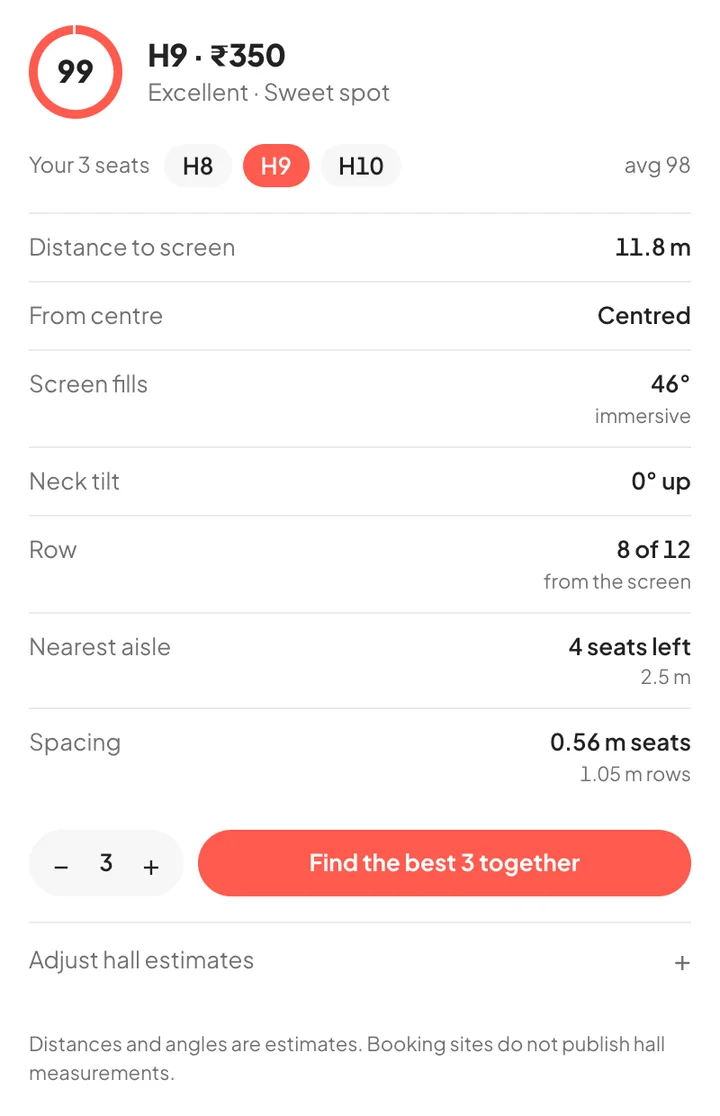
Three things decide a seat
- How much of your view the screen fills. Too little feels like TV. Too much and you turn your head to follow the action.
- How straight you face it. From the side, the picture leans and the sound pulls to one side.
- How far you look up. The front rows mean two to three hours with your head tilted back.
Sound is a fourth, and it lands in the same place.
Who sets the rules?
Three names come up again and again in this post. Here’s who they are.
THX
Started by Lucasfilm, 1983
Certifies cinemas and home theatres for picture and sound. A “THX Certified” hall has passed its tests.
SMPTE
Society of Motion Picture and Television Engineers
The engineers’ body that writes the technical standards for film and TV, from film reels to digital cinema.
ISO
International Organization for Standardization
Sets worldwide standards for almost everything, including how bright a cinema screen should be and where to measure it.
1. How much of your view the screen fills
The useful number is the viewing angle: how wide the screen looks from your seat, in degrees. Move forward and it grows. Move back and it shrinks.
- THX recommends the screen fill at least 36° of your view from the farthest seat in the hall.
- An older SMPTE guideline (EG-18, 1994) asked for about 30°. It was withdrawn in 2003 but is still the most quoted cinema design reference.
- You’ll often read “40° is THX’s ideal”. We couldn’t find that on THX’s own pages, so treat it as a rule of thumb.
Why not sit right up front for the biggest picture? Both eyes together see about 114° side to side, but you only read detail comfortably in the middle, roughly 30° either side of where you look. Try it below.
Your seat, from above
Tap a row to sit there
The view from row H
Sweet spot: big, and all of it in view
2. Face the screen straight on
Off to the side, the picture leans, 3D gets dimmer, and the sound pulls toward the nearer speakers. Our score counts seats within 13° of the centre line as centred. When you have to choose, move back before you move sideways.
From the centre
The picture is a true rectangle. A ball is round, subtitles are level.
From the side
Near edge taller, far edge squeezed. The ball turns oval and subtitles slope.
3D on a silver screen
The screen throws light back to the middle. Side seats get less, on top of what the 3D glasses block.
3. Don’t look up all film
The same SMPTE guideline said discomfort starts for most people when the top of the screen is more than 35° above eye level. In a typical multiplex, the first row or two pass that line.
Recliners make it worse up front: leaning back tilts your eyes up even more. That’s one reason Indian multiplexes put recliners in the back rows. They cost more because they take more room: Cinépolis India has said one VIP recliner takes 2.5 times the space of a regular seat.
4. Where the hall is measured
Audio technicians say a cinema’s sound is calibrated from the centre line, about two-thirds of the way back. The picture is measured there too: ISO 2910, the international standard for screen brightness in cinemas, puts the meter (clause 4.4) about 1 m above the floor, on the centre line, two-thirds of the way from the screen to the back row.
So the two-thirds seat is the one the hall is tuned for. Dolby Atmos, the sound format that adds speakers in the ceiling as well as on the walls, makes the centre matter even more: from a side seat, overhead sounds seem to come from the side.
Four seats, one hall
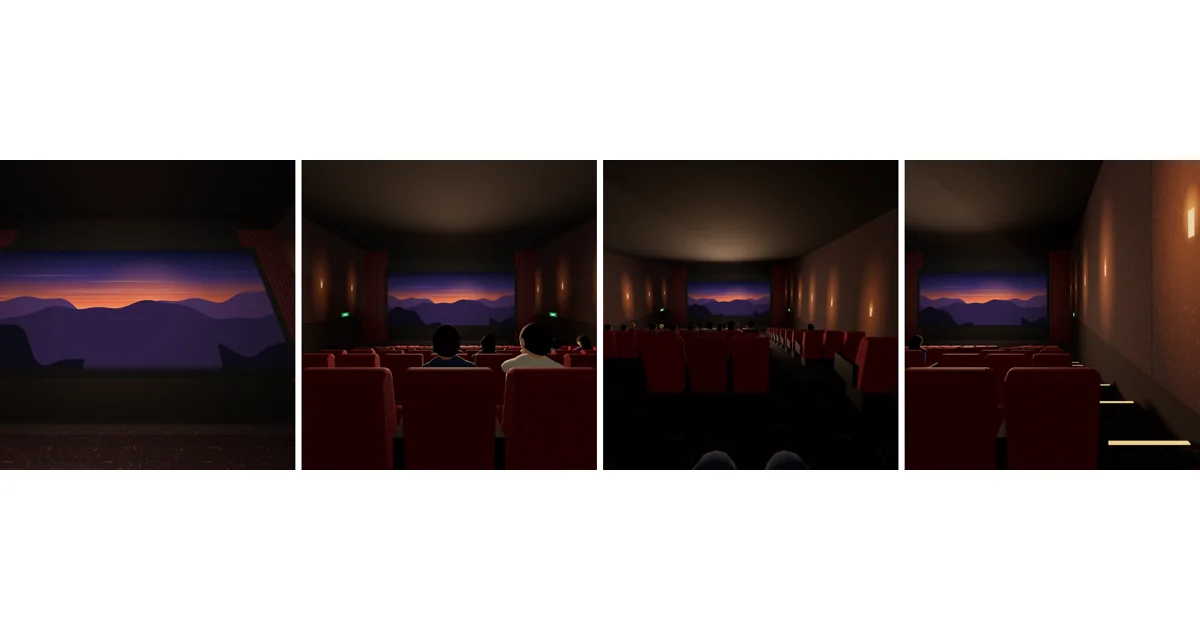
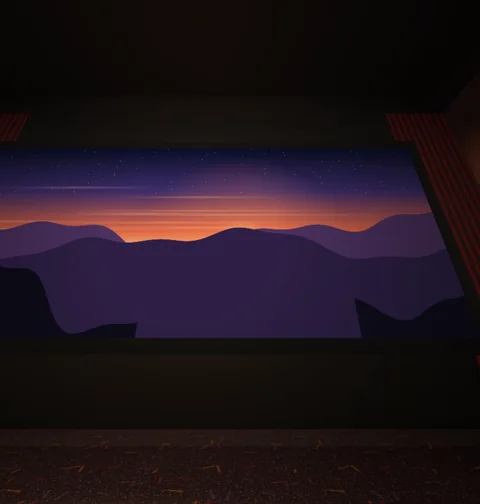
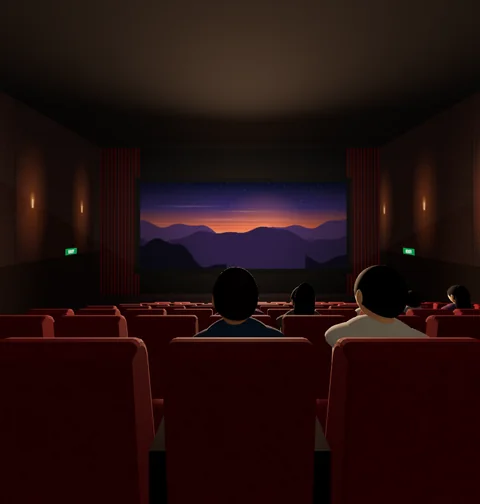
We sat in four seats of the same 12-row multiplex hall in the seats.movie 3D view.
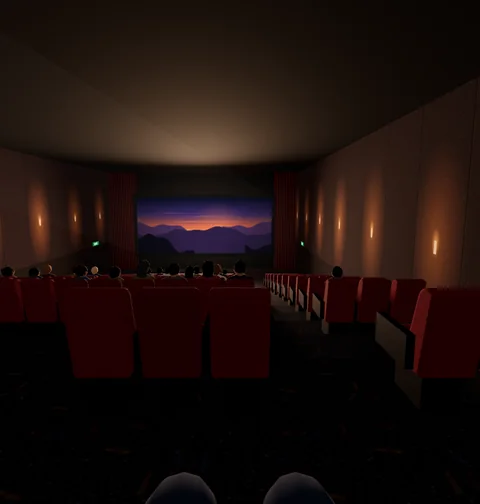
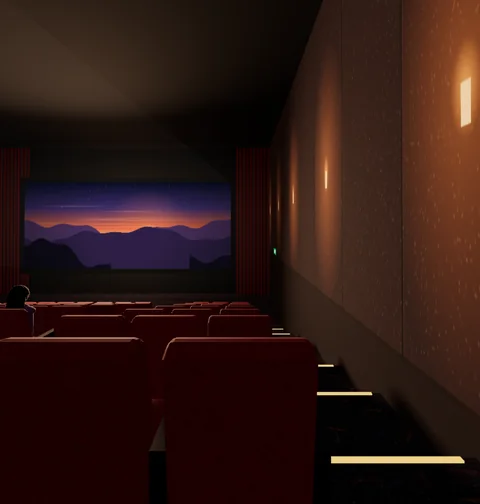
| Seat | Score | Distance | Screen fills | Head |
|---|---|---|---|---|
| A6, front row | 32 | 5.1 m | 95° | 25° up |
| H9, two-thirds, centre | 99 | 11.8 m | 46° | Level |
| L6, back row | 79 | 18.4 m | 30° | 5° down |
| H17, far side | 75 | 13.0 m | 39° | Level, 25° off centre |
When to bend the rule
Standard
Two-thirds back, centre.
IMAX
A row or two further back. The screen is taller.
3D
Narrower: stay as central as you can.
Dolby Atmos
Middle rows, centre: overhead and side speakers balance there.
Small hall
Sit closer. The back row can feel far.
Group of 4
Pick the block whose worst seat is still good.
Christopher Nolan says he sits just behind the middle for IMAX, and near the front, third row centre, for regular widescreen films. For subtitled films, the back half is easier: less eye travel to read.
The honest bit
No peer-reviewed study names one “best seat in a cinema”. The two-thirds, centred rule comes from how cinemas are designed and measured, plus how your eyes work. Screen size, rake and aisles move the sweet spot from hall to hall. That’s why we score the actual seat in the actual hall.
Find the best seat for your show
Pick your city on seats.movie, choose a movie, and we rank every show by the best seats still free, with a 3D view from each. The method: how we pick the best seat. The two-minute version of this post: best seats in a movie theatre.